
Whatnot Advanced Tactics for Coin and Bullion Sellers
Advanced Whatnot tactics for coin and bullion sellers: show formats, audience retention, pricing psychology, lot building, repeat buyers, and sourcing inventory that drives competitive bidding.
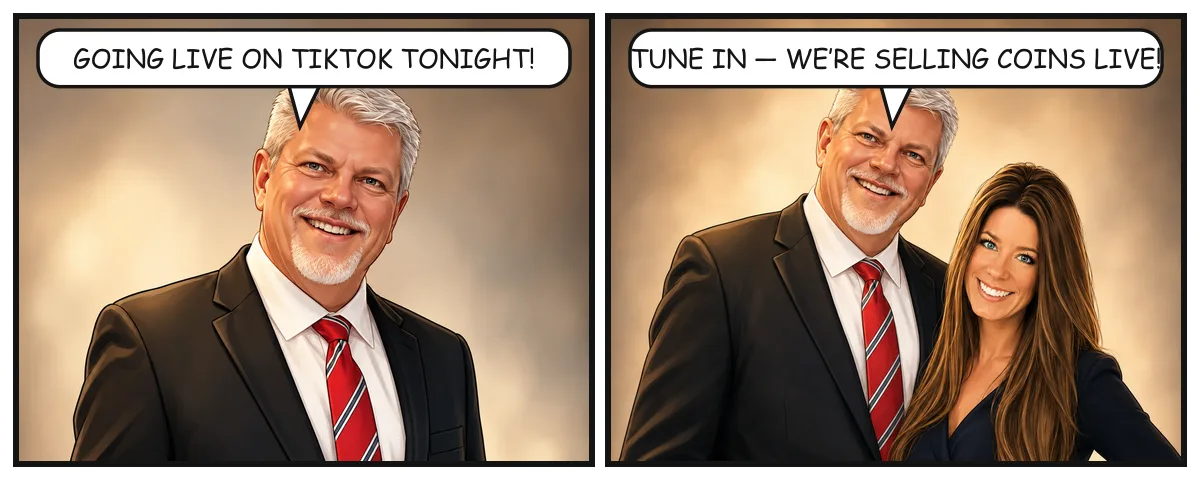
The difference between Whatnot sellers who top out at $500 per show and those who consistently clear $5,000+ comes down to three things: show structure that builds energy from open to close, lot composition that keeps bidders engaged across the full two hours, and a repeat-buyer base that shows up every week. All three are learnable and improvable with data.
If you have been selling coins and bullion on Whatnot for a few months and your shows are working — buyers are finding you, bids are coming in, you are turning inventory — the question becomes: what does it take to go from good to great? The gap between a $500 show and a $5,000 show is not luck or a larger following. It is show structure, lot composition, pricing psychology, and a repeat-buyer base that compounds over time.
This guide is for sellers who have the basics down and are ready to optimize. It covers advanced show formats, how to build lot sequences that maintain energy from open to close, pricing tactics that lift the average bid without resorting to tricks, how to build the kind of audience that comes back every week, and what sourcing strategies give you inventory that drives competitive bidding rather than polite offers.
The anatomy of a high-performing Whatnot show
Every strong Whatnot show has the same basic arc, even if the specific products and prices are completely different.
The opening: warm up, do not front-load
The opening ten to fifteen minutes of a Whatnot show are not the time to sell your best inventory. The room is cold, regulars are still trickling in, new viewers are evaluating whether to stay. Your goal in the opening is to get people to bid at all — which means giving them something low-stakes to win.
Giveaway or near-spot lots in the opening serve this function: a copper round for a dollar, a small silver lot at a penny above spot, a common piece at a price that gets people clicking. Once someone has bid and won, they are invested. The psychological principle at work here is that participation breeds loyalty — a buyer who has already won one lot is significantly more likely to bid on the next ten.
Greet regulars by name. If you can see the names of people joining in chat, welcome them back. “Good to see you, [name], we’ve got some custom silver tonight you’re going to like” is more powerful than any scripted intro. Recognition is the cheapest retention tool on the platform.
The build: momentum and variety
The mid-show body — roughly the 15-minute to 90-minute window — is where you move volume. Maintain momentum by alternating the energy of lots:
Vary price points. Do not run ten consecutive expensive lots that price out budget buyers. Intersperse accessible lots between premium ones. Budget buyers who win occasionally are still in the room; priced-out buyers leave.
Vary metals. Silver, gold, copper in sequence keeps the room engaged. A copper lot at $2 right after a silver lot at $50 resets the energy, pulls in different buyer segments, and prevents the mental fatigue of sameness.
Vary formats. Individual coins, small lots, larger lots, a mystery box. Mix it up. The element of not quite knowing what comes next keeps attention.
Set tempo deliberately. Fast-paced shows (lots moving every 60–90 seconds) feel exciting but can feel rushed and produce lower per-lot numbers. Slower pacing (2–3 minutes per lot) gives bidders time to decide but can lose energy. Find the rhythm that fits your audience — some crowds want action, some want the deliberate back-and-forth of real bidding. Track your average lot price by time-in-show and see whether your tempo is working for you.
The close: peak inventory, peak energy
The final 20–30 minutes of a Whatnot show should feature your best inventory. By this point, your show’s regulars are fully engaged, competitive dynamics have been established among your active bidders, and the people who stayed this long are the people who want to buy.
Save your most exclusive pieces, your lowest-mintage items, and your premium lots for the close. The bidding energy that has been building across two hours finds its release on your best material. This is also where the “fear of missing out” is strongest — “this is the last lot of the night and there are only three of these” is not a sales tactic; it is simply true when you are selling exclusive product with limited availability.
End on time. Your regular audience plans around your show schedule. If you say two hours, run two hours. Ending late occasionally is fine. Running wildly over consistently trains your audience that your stated end time is meaningless, and some will stop waiting and leave before your best lots.
Lot building: the science of what to package together
How you build lots is as important as what you put in them. The same products packaged differently can produce meaningfully different final prices.
Anchor lots
An anchor lot is a high-value item you show — and ideally sell — just before a lesser item you want to lift. After a buyer wins a $150 custom silver round, $35 feels cheap even if it is above your actual target. Explicit anchoring sounds like: “We just moved that custom piece for $150 — now we have this companion design from the same series starting at $30.”
The same principle applies to showing product you are not actively selling: displaying a beautiful high-value piece while you sell surrounding inventory raises the buyer’s frame of reference for everything in your show.
Set and series selling
If you carry coins from the same series — the same design family, the same artist, a themed collection — selling them in sequence over multiple shows creates a collector incentive that generic lot selling cannot. Buyers who won Piece 1 and Piece 2 are strongly motivated to come back for Piece 3. That motivation is worth more than any promotional offer you could run.
We produce custom exclusive series at 320 Coins specifically for this reason: low-mintage releases, themed collections, companion designs. Resellers who carry our product often tell us that series selling is where their show loyalty compounds fastest — buyers follow their account to catch the next release.
Lot sizing and psychology
- Singles sell best when the item is distinctive, higher-value, or a piece buyers feel competitive about owning individually.
- Matched pairs or small lots of two to three can command a premium above individual pricing because collectors who want uniformity (matching strikes from the same tube, same finish) value the convenience.
- Larger lots (five to ten coins) work for stackers and investors who want quantity. Price these per-unit competitively — stackers are price-aware — but the aggregated sale value per lot is higher, which raises your average lot transaction.
- Mystery boxes build energy disproportionate to their actual value. The suspense of not knowing keeps attention and generates chat engagement. Reserve mystery boxes for transitional moments in the show — between segments, at the 45-minute mark to re-engage viewers who are drifting.
Pricing psychology that lifts bids
Starting price strategy
Starting price anchors the floor but also signals value. Starting too low on genuinely valuable pieces can signal to bidders that you do not believe in the product. Starting at a realistic floor (spot value, or near it for bullion) frames the bidding correctly.
For custom and exclusive pieces where there is no spot comparison, starting the auction at 30–40% of your retail price creates urgency without leaving money on the table. The bidding war above that floor determines the final price.
Live price transparency
Sharing your cost of goods (without giving away supplier relationships) can counterintuitively lift bids: “I paid $28 each for these, we’re starting at $30” tells buyers they are getting a fair deal and signals your margin is thin. Transparency builds trust, and trust is what enables premium pricing on exclusive product where buyers cannot verify value by spot comparison.
When to take a loss on a lot
Occasionally selling a lot at a loss — near spot on generic silver, or a token copper lot — is a tool, not a failure. A strategic loss lot mid-show resets the energy, pulls in bidders who had been waiting for value, and earns reciprocity from an audience that now feels they got a deal. That goodwill translates to stronger bids on the lots that follow.
Building and retaining your repeat audience
The Whatnot shows that generate consistent high revenue are not the ones with the most followers — they are the ones with the most engaged repeats: buyers who come back every week, know your format, trust your inventory, and bid from accumulated confidence rather than one-time impulse.
Consistency as the foundation
Show up on the same day at the same time every week. This is the single highest-leverage habit in Whatnot selling. When your audience knows that Thursday at 7pm is your show, Thursday at 7pm becomes a habit for them too. Irregular scheduling means each show is a from-scratch effort to rebuild the room.
Recognition and relationship
Call out repeat buyers. Thank them for coming back. Remember what they like. “I know [buyer] collects the antiqued finishes — we’ve got a new one tonight you haven’t seen yet” is worth more than any discount. Whatnot’s community is built on personality-driven selling; relationship is the moat.
Notification strategy
Whatnot allows you to notify followers when you go live. Supplement this with:
- SMS or email reminders to your own list (not dependent on Whatnot’s notification delivery). Even a simple text or email an hour before “going live at 7pm tonight with new custom silver” meaningfully increases attendance.
- Social media countdowns on TikTok or Instagram in the 24 hours before your show. A short teaser clip of what you are bringing to the show — especially exclusive or new inventory — pulls in viewers who would not have found your notification otherwise.
- Community content between shows. Post an educational TikTok or Instagram reel between your live shows. The audience you are building on content channels flows to your live shows; the audience from your live shows follows you on content channels. These reinforce each other.
Exclusive regulars perks
Create a reason for loyal buyers to feel insider status:
- Early access lots reserved for buyers who have purchased in your last three shows
- Collector bundles that only make sense if you have been following the series from the start
- First-pick on pre-orders for upcoming exclusive releases
Exclusivity and status are more powerful retention tools than discounts. Discounts attract price shoppers; exclusive access attracts loyal collectors.
Sourcing the inventory that drives bidding wars
The single biggest lever on your Whatnot show performance is not your hosting skill or your camera setup. It is the inventory you bring to the show.
Generic rounds at spot price generate polite, price-floor bidding. Nobody is fighting over the same product that every other Whatnot coin seller has in their inventory. But a custom-designed piece with a 250-unit mintage that nobody else carries? That creates genuine scarcity. Bidders who want it know there is no substitute, no other show to catch it at next week. That reality produces competitive bidding.
This is why our wholesale program is designed around exclusive and custom designs rather than generic product. When you source from us, you carry inventory your competitors do not have — which changes the dynamic of your shows from price competition to collector competition.
Browse our current inventory and collections to see what is available, and apply for a wholesale account to get tiered pricing and pre-order access to upcoming exclusive releases.
Tracking your performance
After every show, record:
- Total revenue
- Number of lots sold
- Average lot price
- Highest bid (and what it was on)
- Lowest lot (strategic loss lots vs. unplanned)
- Attendance peak and show duration
After a month, you will have data that tells you which formats, lot types, and time slots produce the best results. That data is worth more than any tactical advice because it is specific to your show, your audience, and your inventory. Make one change at a time, run it for three to four shows, and measure the effect before changing something else.
The Whatnot sellers who build real businesses are the ones who treat each show as an experiment and each month as a dataset. The platform rewards that rigor with compounding audience growth and show revenue that improves every quarter.
Frequently Asked Questions
What is the best show format for selling bullion on Whatnot?
The most effective format opens with accessible, lower-priced lots to warm up bidders, builds through mid-show with your core inventory, and closes with your best or most exclusive pieces when energy and competitive bidding are highest. Never lead with your best item — save it for when the room is hot.
How do I build a repeat audience on Whatnot?
Consistency is the foundation: same day, same time, every week. Beyond that, recognize returning buyers by name, give regulars early access or exclusive lots, and build a notification list (email or SMS) that reminds followers when you go live. Repeat buyers are where the compounding revenue lives.
How should I price lots on Whatnot — fixed or auction?
A mix works best. Fixed-price giveaway lots (near or slightly below spot) create urgency and pull in new bidders. Auction lots on exclusive or custom pieces capture maximum market value. Anchoring — showing a higher-value item before a lower-value one — systematically lifts bids on the secondary lot.
What inventory drives the highest bidding energy on Whatnot?
Custom and exclusive designs unavailable anywhere else reliably generate the most competitive bidding because there is no comparison price. Limited mintage creates urgency. Sets and series create collector loyalty — viewers want the next piece to complete a run they already started.
Share this article
Published by 320 Coins · Precious metals since 2016 · Shop bullion & coins
Sister sites: US Coin Shows · NOSA · GunExpos · Love Those Deals · The Digital Track