
Selling Precious Metals on Facebook Marketplace and Groups
How to sell silver and gold on Facebook Marketplace and Facebook coin groups: listings, photos, pricing, scam avoidance, safe payment, policy cautions, and sourcing.
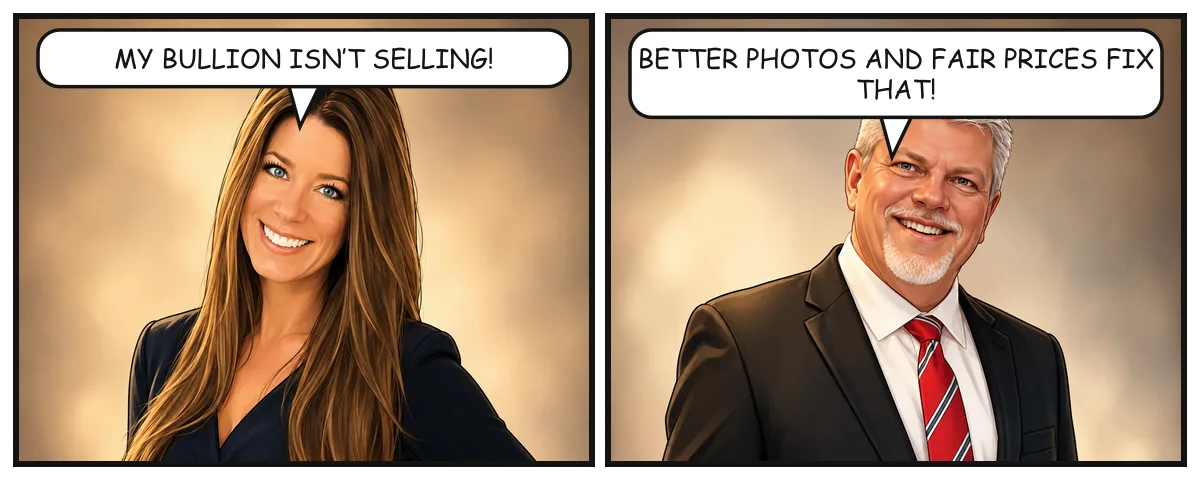
Facebook remains one of the largest informal marketplaces for precious metals, and plenty of resellers build a steady side income there. But it is also one of the riskiest places to transact if you do not know the terrain. If you want to sell silver and gold on Facebook Marketplace, or work the dedicated Facebook coin groups, this guide covers how to list, price, and ship safely while protecting yourself from the scams that target this category.
We are a US-based dealer that has been in the metals business since 2016, and we supply many of the sellers who work these channels. Here is the honest version of how to do it well.
Marketplace vs. buy/sell/trade Groups
These are two different sales environments, and the smart move is to use both for what they do best.
- Facebook Marketplace is broad, local-first, and built for casual browsers. It is good for moving volume on recognizable items like junk silver, common rounds, and fractional gold, but you will field more lowball offers and more tire-kickers. Bullion listings on Marketplace also get flagged by automated moderation more often, so expect some friction.
- Buy/sell/trade Groups (the dedicated Facebook coin groups) are where serious collectors and stackers gather. The audience is smaller but far more knowledgeable and intent-driven. Each group has its own rules, posting format, and feedback or reputation thread. Groups convert better for higher-premium and custom pieces, but you must respect each group’s posting rules or you will get removed.
A practical approach: use Marketplace for steady, lower-premium turnover and Groups for relationship-driven sales of nicer material. Many successful resellers run both in parallel: they list bread-and-butter inventory on Marketplace to keep cash flowing, and they reserve standout pieces, custom pours, and limited items for the groups where the right buyers will pay a fair premium. Over time you will learn which of your local and niche groups actually convert, and you can stop wasting effort posting to dead ones.
Listing best practices and photos
In a category built on trust and detail, your listing quality is your conversion rate.
- Photograph honestly and in good light. Use natural daylight or two diffused lights at angles to avoid glare. Show the obverse, the reverse, and a close-up of any toning, marks, or wear. Silver and gold photograph best on a dark, matte, non-reflective surface.
- Include a scale or weight shot when relevant. A photo of the item on a scale builds instant credibility for bars and rounds.
- Write a clear, specific title and description. State the metal, weight, purity, quantity, and condition. Generic listings get ignored or flagged; specific ones get serious buyers.
- Disclose flaws. Note scratches, spots, or wear up front. Disclosure prevents disputes and protects your reputation in groups where feedback follows you.
- Follow each group’s format. Many groups require a specific tag (for sale, price, location) in the first line. Read the pinned rules before you post.
A few extra photo habits separate professional listings from the ones buyers scroll past. Shoot in focus and fill the frame, since tiny thumbnails of distant coins get ignored. Use the same neutral surface and lighting for every listing so your feed looks consistent and trustworthy. Include a reference object or your own handwritten note with the date in one shot for higher-value items; it proves the photos are current and yours, not lifted from somewhere else. And never use stock or manufacturer images for a specific item you are selling, because the moment the real coin does not match, you have a dispute and a damaged reputation.
Pricing
- Anchor to live spot. Keep the current spot price open while you price. For generic silver and gold, your number is spot plus a fair premium that reflects the product and your costs.
- Premiums differ by product. Junk silver and generic rounds carry thin premiums; sovereign coins, fractional gold, and custom or limited pieces command more. Do not apply one flat markup to everything.
- Price for the channel. Group buyers know spot cold and will push back on inflated premiums. Marketplace buyers are often less informed but more likely to lowball. Set a firm floor and decide in advance how much you will negotiate.
- Factor in payment and shipping costs. If you accept fee-bearing payment methods or ship, build those costs into your price. Confirm any current platform or payment-provider terms yourself, since fee structures change.
Avoiding scams: payment, meetups, and shipping
This is the most important section. Precious metals attract scammers because the items are liquid, valuable, and easy to resell.
- Treat “send it first, I’ll pay on arrival” as a hard no. Reverse the order. Payment clears first, then you ship or hand over.
- Beware reversible and fraudulent payments. Some peer-to-peer payment apps allow chargebacks or have “goods and services” disputes that can claw back funds after you have shipped. Understand how each method you accept handles reversals, and prefer methods that are final for higher-value sales.
- Verify before you ship. For mailed sales, confirm the payment has actually settled in your account, not just shows as “pending.”
- For local meetups, choose safe public locations. Many police departments offer designated safe-exchange zones. Meet during the day, bring someone if possible, and never invite strangers to your home.
- Watch for classic red flags: urgency, an unusually generous offer, a request to move off-platform immediately, overpayment “by mistake” with a request to refund the difference, or a buyer who refuses any verifiable payment.
- Ship like a professional. Use discreet, plain packaging, secure the items so they cannot rattle, add insurance to your full declared value, use tracking, and require signature confirmation on high-value shipments. Photograph each packed order before sealing it.
- Keep a paper trail. Save the conversation, the payment confirmation, the buyer’s shipping address as provided, and the tracking number. If a dispute ever arises, organized records are your best defense.
A safe-transaction checklist
Before money or metal changes hands, run through this every time: Is the payment final and actually settled in your account, or merely pending? Does the buyer have any visible history or feedback in the group? Are you shipping to the same name and verified address tied to the payment? For a local meetup, is it a daytime exchange in a public safe-exchange location? If any answer makes you uneasy, slow down. The vast majority of losses in this category come from skipping one of these steps because the deal “felt fine.” A genuine buyer will not object to reasonable verification.
Platform policy cautions around bullion
Facebook’s commerce policies restrict or scrutinize certain financial and high-value items, and automated moderation sometimes removes legitimate bullion listings or limits accounts. To stay in good standing:
- Read the current Commerce Policies rather than assuming. They change, and enforcement varies.
- Avoid language that reads as investment solicitation. Sell the item, not a financial return.
- Keep transactions clean and avoid repeated off-platform redirects in public posts, which can trip moderation.
- Respect each group’s rules, including any required vouching, feedback threads, or limits on how often you can post.
If a listing gets removed, do not repeatedly re-post the identical item, which can escalate account penalties. Adjust and try a compliant format.
Building reputation
Reputation is the whole game on Facebook metals sales. Participate in group feedback threads, deliver fast and exactly as described, communicate clearly, and never oversell condition. A handful of glowing references in the right groups will bring buyers to you instead of you chasing them. Consistency over months beats any single great deal.
To build a reputation that compounds: start by buying a few items yourself in your target groups so you have honest references and understand the buyer experience. Always leave and request feedback after a clean transaction. Be the seller who answers within hours, ships within a day, and packs every order like it matters. When a problem does happen, and eventually one will, fix it fast and fairly rather than arguing. The story other members tell about how you handled it will outlast the dollar amount involved. Over a year, this reputation becomes your single most valuable asset on the platform, worth more than any individual listing.
Expanding to TikTok
Facebook is excellent for reaching established, community-driven buyers, but it is weak at putting your inventory in front of people who do not already follow coin groups. That is exactly the gap TikTok fills. Between short-form video on the For You Page, TikTok Shop’s native checkout, and TikTok Live for real-time selling, TikTok is built for discovery in a way Facebook Groups are not. A single thirty-second clip of a custom round catching the light can reach an audience Facebook would take months of group participation to build.
The two channels complement each other cleanly. Use TikTok’s short-form videos and Lives to pull in fresh buyers, then lean on the trust-and-feedback machinery of your Facebook groups to close higher-premium and relationship-driven sales. The honest-photography, disclose-everything, ship-clean discipline that earns you a reputation on Facebook is exactly what builds trust on TikTok too. And TikTok Shop’s on-platform checkout sidesteps a lot of the reversible-payment scam risk that makes Facebook sales nerve-wracking, since the platform handles payment instead of an informal app transfer.
If you want to add it as a channel, we have a full walkthrough: selling coins and bullion on TikTok Shop and TikTok Live. Our other selling online guides cover the rest of the major platforms.
Common mistakes to avoid
- Shipping before payment fully clears. The single most common way sellers get burned.
- Accepting reversible payments on big sales without understanding chargeback risk.
- Vague listings and glare-filled photos that kill trust and conversion.
- Ignoring group rules and getting banned from your best sales channel.
- Running dry on inventory right when your reputation starts pulling buyers.
Sourcing inventory wholesale
Margins on Facebook are real but thin once you account for premiums, payment fees, and shipping. Buying at retail to resell barely works. The fix is sourcing at dealer pricing so every sale carries healthy margin.
As a US-based dealer since 2016, 320 Coins manufactures custom-designed silver and gold bullion and supplies resellers at wholesale. See what we make on our products page and our partner and custom lines, explore curated collections, and read more about us on the about page.
When you are ready to source for resale, review the wholesale program and then apply for wholesale. Approved partners get tiered, volume-based pricing built for sellers who move real units. Have a question first? Use our contact page.
List honestly, price to spot, insist on clean payment before you ship, follow platform and group rules, and keep your shelves stocked with inventory you can profit on. Do that and selling precious metals on Facebook Marketplace and Facebook coin groups becomes a dependable channel instead of a minefield.
Share this article
Published by 320 Coins · Precious metals since 2016 · Shop bullion & coins
Sister sites: US Coin Shows · NOSA · GunExpos · Love Those Deals · The Digital Track